
This research project is a personal journey of discovery that aims to explore how communication and design can open the doors for healing and learning far beyond conventional ways. Through this intentional, often circular thinking and specific exploratory projects that make up the research, I have attempted to understand how material practice can help mitigate the effects of grief to assist in the ideas of self-care and healing. It has provided a holistic view of healing and care that recenters culture and identity integral to self-care and well-being.


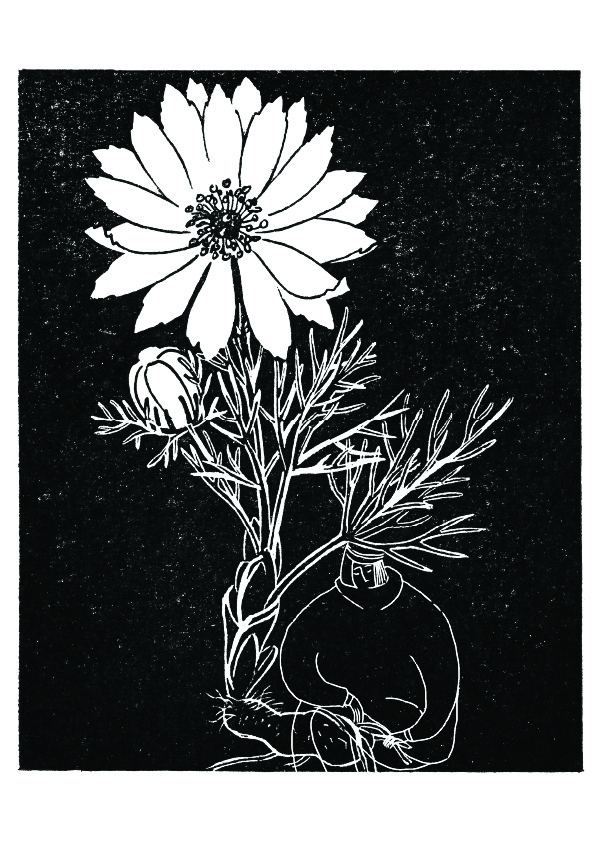
Holistic care is described as behaviour that recognizes a person as a whole and acknowledges
the interdependence among their biological, social, psychological, and spiritual aspects. (Morgan S, Yoder,2012)
Lauren Vaughan states that caring for unknown others is challenging because the farther we move from the familiar, the less control we have and the more risk of failure. Often, we find ourselves becoming lost, unaware of what it may feel like to be in touch with ourselves while caring for others in the community. There’s an under-appreciation for understanding ourselves and that reflective element that I believe is critical to being a designer who can help, listen or even create or formulate work with stakeholders in all fields.
The research uses an experiential (phenomenological) approach which allows contemplation on the experience of practice to create a conceptual work for mitigating grief through material practice. The material practice finds meaning and value in the cultural capital.

I use auto-ethnography because it requires the researcher or designer first to question themselves and their place in the world. Schouwengerg and Kaethler, authors of the auto-ethnographic turn in design, contrast with historical processes in ethnography and design that look outward first. This approach, however, closely tethers research with creative personal expression. They state, “forging deeply intimate objects that research and communicate personal sentiments, traumas, fears, obsessions, hopes, fascinations, passions, and more.”
As we recuperate from the pandemic, sharing and having conversations about how to continue engaging with the self and others is essential. I did this research to serve as both a guide and an invitation for my fellow design researchers – an invitation to dedicate ourselves to facing the realities of life with care, explore how best to heal and commit to ourselves as a community by using creative healing centred design techniques to move forward.
Stitch can tell a story and weave itself into a galaxy of points, moments, and memories. Needle and thread can both meet a need and delight the eye. ( Camille Okhio )
To visualize my narratives and writings, I drifted towards illustration, it allowed me to tell complex narratives in an aesthetically appealing way, and it gave me the power to connect with the audience and draw them into my experience while simultaneously allowing them to create their own narratives through those illustrations. The illustration style that I use is line art it comprises minimal lines and negative space to create a design. Featuring smooth, curved lines inspired by geometric shapes, human faces, flowers and other natural elements, it builds the narrative in a simple yet abstract way.
My illustration process does not have a fixed route, sometimes, I start with drawing on paper or directly on my Wacom in digital software ( Adobe illustrator and photoshop) to draw, enhance, refine or extend the hand-drawn scribbles.

In Conclusion– This research has allowed me higher emotional granularity and the awareness to become a conscious and thoughtful designer, social worker, friend and citizen of the world who is in tune with herself and her practice. It is critical to where I stand now.
There’s always an under-appreciation for understanding ourselves and that reflective element that I believe is critical to being a designer; only then can you help, listen or even create or formulate work with others in all fields. As we recuperate from the pandemic, it is essential to share and have conversations about how we can continue engaging with the self.
It requires that we work and evolve the practice. At times, the impact and value of the practice will be evident, and other times it will be less. And just like the development of anything, we must persist, be patient with ourselves as we evolve, and know that it benefits (for ourselves and others), and it may take a lot of time.
I hope that my work will continue to enliven over time. The thinking that I have offered as a designer and social worker can be a starting point for designers to construct their own personalized tools. Which will mitigate the effect of grief and encourage the practice of self-care, which is a critical determinant of being a good practitioner and a conscious designer. May these practices move you toward your wellness and wholeness.
Zahra, Syeda Maleeka. 2022. “Healing Through Making”. Emily Carr University of Art and Design.
 S.Maleeka Zahra